Regular timing belt servicing is an essential part of your car’s engine performance and supports a safer driving experience. Since the timing belt works inside the car’s engine bay, changes in its condition may often go unnoticed unless the vehicle performs in a different way. Thus, understanding the worn timing belt symptoms and how they relate to overall engine function helps you to take the right step for your car’s maintenance.
This guide explores the common signs of worn timing belts, what can happen if you overlook them and why timely inspection from a mobile mechanic in Perth is important for your vehicle.
What Happens If Timing Belt Servicing Is Ignored?
Ignoring timing belt service increases the likelihood of the belt wearing beyond its recommended service life. As the belt ages, it may lose grip or become damaged because of physical wear. As a result, a worn timing belt affects the synchronisation between the crankshaft and camshaft. As the timing between these components becomes inaccurate, your car’s engine may show the following problems:
1. Your car takes longer to start the engine or does not start at all. 2. Engine misfiring caused by incorrect valve timing. 3. Reduced engine performance and slower acceleration. 4. The engine stalls if the belt slips significantly. 5. May bend valves and damage pistons, which may damage the entire engine.
To fix these issues, an inspection of your car by a mobile auto mechanic becomes essential.
Key Signs That Call for Timing Belt Servicing
The timing belt gets worn when it is near the end of its lifespan or due to physical damage. While some of the following symptoms may seem minor at first, they can indicate that the belt or related components require inspection by experienced mobile mechanics.
1. Unusual Engine Ticking or Clicking Noise
Ticking or clicking sounds originating from the engine’s front side may signal that your timing belt is worn out or lacks proper tension. Since both the belt and the components it works with tend to wear down, they won’t function as well as they used to. This kind of timing belt noise is often one of the earliest clues that you should have your vehicle inspected by a mechanic.
2. Engine Misfires and Rough Running
If the timing belt starts to wear out or goes out of alignment, then the valves of the engine might lose their synchronisation. This can cause poor combustion and will result in jerky idling, misfiring of the engine, and poor acceleration. Because of that, you may experience that your car’s performance or fuel efficiency is reduced. A quick round of auto engine diagnostics can confirm whether the timing belt is behind these symptoms.
3. Difficulty Starting the Engine
A loose timing belt will make it difficult to start the engine since the camshaft and crankshaft will not be synchronised properly anymore. At first, the engine will take a longer time to start compared to normal times. In case this problem escalates, your car may not even start. If your vehicle is difficult to start, have it professionally diagnosed before continuing to drive it.
4. Visible Belt Damage
While the timing belt is normally covered, a mechanic may inspect it and related components during appropriate servicing or a dedicated timing belt inspection. The following are common indicators of wear and tear in a timing belt:
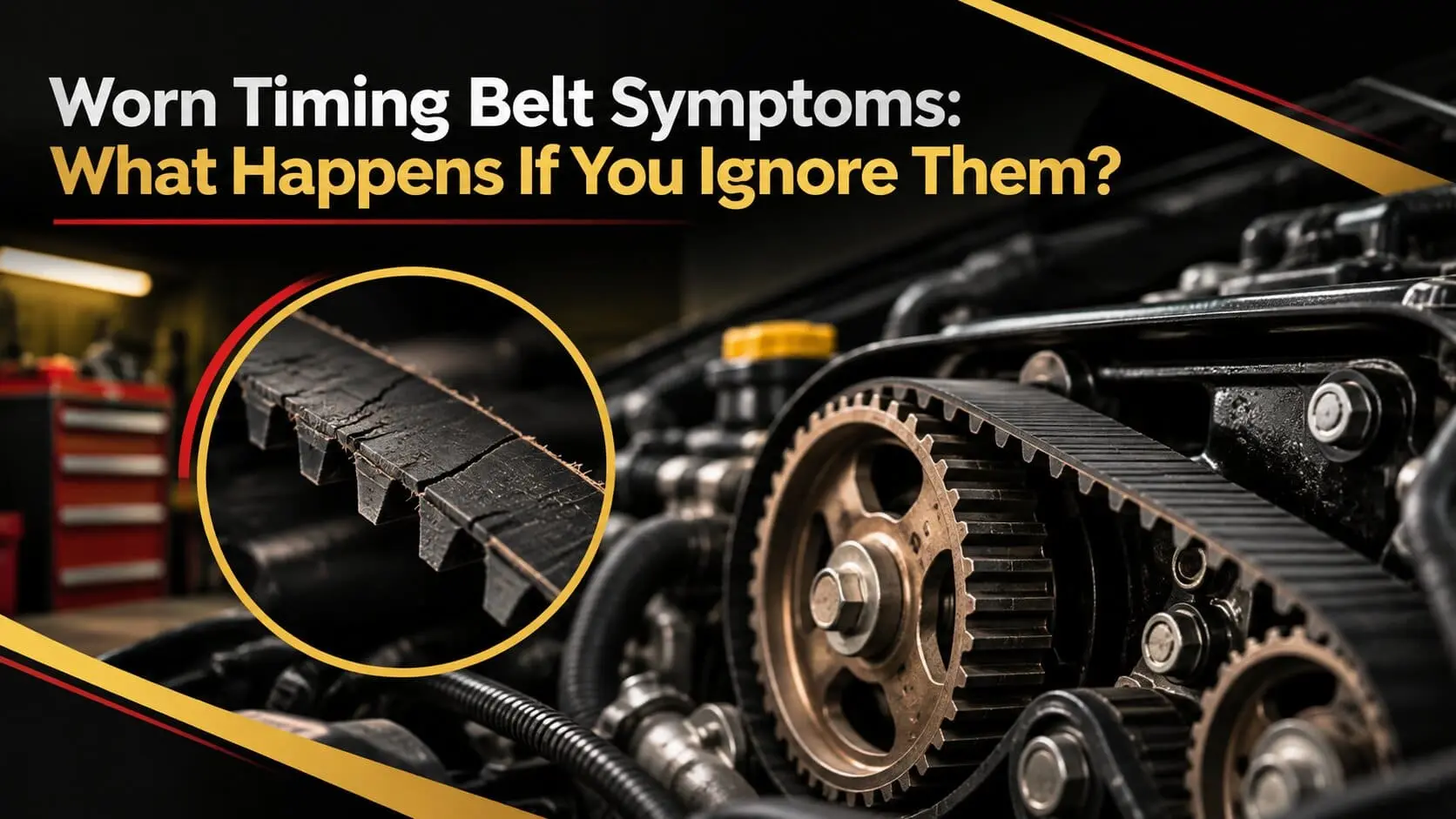
1. Cracks on the rubber surface 2. Fraying of the edges 3. Missing or worn teeth 4. Oil or coolant leaks 5. A glazed or polished appearance
Which Vehicles Are Most at Risk of Timing Belt Failure?
Timing belt wear can vary depending on the vehicle, engine design, age, mileage, driving conditions and maintenance history. Particular attention may be needed when:
1. The vehicle is approaching the manufacturer’s recommended replacement interval. 2. The replacement history is unknown. 3. The vehicle has exceeded its recommended service interval. 4. Oil or coolant leaks may be contaminating the belt. 5. Related components such as tensioners or pulleys show signs of wear.
If your vehicle comes under this list, then you should get your car checked by an expert mobile car service provider in Perth today.
When Should Timing Belts Be Replaced?
You should replace your car’s timing belt if it has travelled 100,000 km or 150,000 km, or if the vehicle is more than 5 to 10 years old. The actual timeline may differ for each car’s make and model. In some cases, there might be an earlier recommended time for engine timing belt replacement due to the make or engine type.
What is the Timing Belt Replacement Cost?
The typical cost of atiming belt replacement in Perth is between $550 to $2,450. The actual cost to change the timing belt of cars may differ between the make and model.
How Does a Car Inspection Service Help Prevent Unexpected Failures?
In a professional vehicle inspection, our mobile mechanic can examine not only the timing belt but also the other parts that affect its functioning.
Some of them include:
1. Examining the timing belt for any signs of wear, which could be cracks, fraying, glazing, missing teeth, among others. 2. Measuring the tension of the timing belt to ensure that it is working in the right order and appropriately synchronises the crankshaft and camshaft. 3. Checking the tensioner and idler pulleys to diagnose and fix any signs of wear and bearing noise. 4. Inspection of the water pump. 5. Oil or coolant leakage, which could cause contamination of the timing belt and result in faster deterioration of the rubber parts.
Along with the above services, we also provides logbook and car repair services for different makes and models.
Final Thoughts
Overlooking major signs of a worn timing belt can lead to engine damage and other related component breakdowns. Since this component keeps the crankshaft and camshaft synchronised, you should inspect for signs of wear without any delay if you notice any changes in your car’s performance. Replacing your car’s timing belt as per the manufacturer’s recommended intervals and getting it checked by professionals who provide mechanical car repairs in Perth can help you reduce the risk of unexpected failures.
FAQ’s
1. What are the most common worn timing belt symptoms?
Answer 1:
The most common symptoms of a worn timing belt are ticking noises from the engine, rough idling, engine misfires, difficulty starting, reduced performance and visible belt damage.
2. When should a car’s timing belt be replaced?
Answer 2:
A timing belt replacement in Perth is preferred every 100,000 to 150,000 kilometres of travel or every 5 to 10 years of usage. However, the exact interval depends on your car’s make and model.
3. Can I drive with a worn timing belt?
Answer 3:
Driving with a suspected worn or damaged timing belt can increase the risk of belt failure and engine damage. If you notice symptoms, have the vehicle inspected as soon as possible rather than continuing to drive it unnecessarily.
4. Does a worn timing belt affect engine performance?
Answer 4:
Yes, a worn or slipping timing may affect acceleration, fuel efficiency and lead to engine misfires. If you experience any of these symptoms while driving, you should inspect your vehicle with the help of a mobile mechanic without any delay.
5. Can a timing belt fail without warning?
Answer 5:
Yes. A timing belt can sometimes fail without obvious warning, which is why following the manufacturer’s recommended replacement interval is important. If you notice unusual engine symptoms, arrange a professional inspection.
6. Can a faulty timing belt cause engine misfires?
Answer 6:
Yes, your car’s engine may misfire if the timing belt stretches or slips. In these situations, a mobile mechanic’s timing belt service can restore correct timing and stop the misfires.