The fact that your brake pedal feels soft is something that you must not ignore at any cost. If your brake pedal goes lower than normal or feels spongy, then it means that the braking system is not working properly and must be checked by a professional. Since your brakes are directly tied to your safety, even a slight variation in the feel of your pedals should be addressed instantly.
Your brake pedal is your first point of contact with the braking system. When the response is not the same, there is something wrong somewhere behind the scenes. Ignoring early warning signs can allow a small hydraulic or mechanical issue to turn into a serious safety concern.
1. Brake Fluid Leak
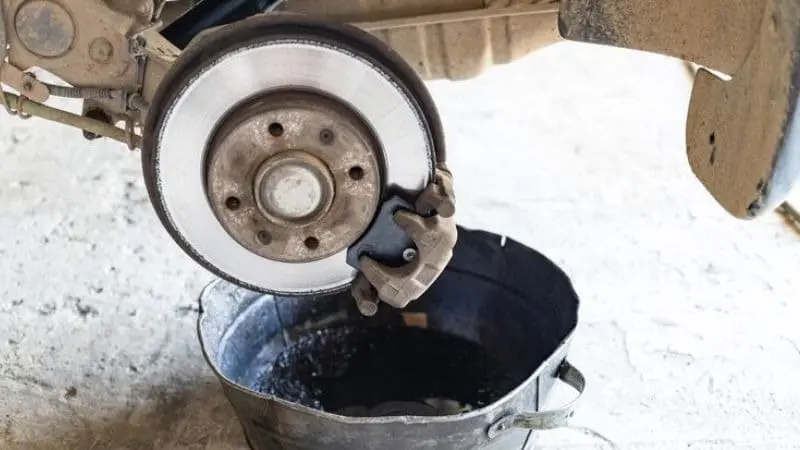
One of the most frequent causes why the brake pedal feels soft is brake fluid leakage. Since brake fluid pressurises the system, any loss directly impacts performance.
Brake fluid can leak from:
– Brake lines
– Master cylinder
– Calipers
– Other connected hydraulic components
Fluid does not just vanish. When there is an underlying leakage, the levels will go down in the reservoir, and the leakage must be located and repaired by clutch and brake services as soon as possible.
2. Old or Degraded Brake Fluid
Brake fluid may lose its efficiency even though there are no noticeable leaks. The majority of automakers suggest the replacement of brake fluid after a few years.
As brake fluid ages:
– The rust particles can accumulate
– The system can be contaminated with debris
– The performance of fluids may deteriorate
Degraded fluid may no longer function as intended, which results in decreased hydraulic efficiency and a softer pedal feel. Getting the issue fixed by a mobile car mechanic Perth can help restore the safety and efficiency of the braking system.
3. Air Pockets in Brake Lines
Air that finds its way into the system can create pockets within the brake lines. Unlike brake fluid, air compresses under pressure.
When this happens:
– Force from the pedal is absorbed by compressed air
– The flow of fluids is limited.
– The pedal can be spongy or bouncy.
Air pockets block smooth hydraulic transfer. Instead of delivering force evenly to each brake component, the system struggles to maintain consistent pressure.
This can occur after a repair if the brakes were not properly bled or from a leak that allowed air to enter. A mobile car repair Perth can fix the issue easily and restore proper braking.
4. Brake Lines and Hoses Can Deteriorate Over Time
Brake lines operate under constant pressure, especially during frequent stop-and-go driving. Over time, both metal lines and rubber hoses can deteriorate.
Metal lines may:
– Corrode
– Develop cracks
– Weakened due to age
– Flexible rubber hoses can:
– Swell internally
– Restrict fluid movement
– Lose structural integrity
Damage in these components can disrupt fluid flow, reduce pressure, and create an inconsistent pedal feel.
Early detection by a mobile mechanic Perth prevents complete brake failure and avoids more extensive repair costs.
5. Master Cylinder Trouble Is a Serious Warning Sign
The master cylinder is the heart of the braking system. It distributes brake fluid to each wheel and maintains the necessary pressure.
Inside the master cylinder are seals that keep fluid flowing correctly through pressure chambers. When these seals begin to fail, fluid may bypass intended pathways.
Symptoms of master cylinder failure include:
– A pedal that slowly sinks when held down
– Little or no resistance when pressing the pedal
– Inconsistent braking pressure
When an internal bypass occurs, hydraulic pressure cannot build properly. This results in a pedal that feels weak or unresponsive.
A failing master cylinder requires immediate service by a Perth brake and clutch expert and should never be ignored.
6. Worn Brake Pads Can Affect Pedal Feel
Brake pads typically produce noise before they impact pedal firmness. Grinding or squealing often appears as an early warning.
However, when brake pads become extremely thin, the calliper pistons must extend farther to make contact with the rotors.
This extended travel can:
– Delay braking response
– Make the pedal feel softer
– Create an inconsistent braking sensation
If you haven’t had a recent brake inspection, pad thickness should be checked during diagnosis. Getting a brake pad replacement Perth done before they become excessively thin prevents rotor damage and maintains responsive braking.
Also Read: How Much Does Brake Pad Replacement Cost In Perth?
7. ABS Modulator Valve Issues
Debris can build up inside the ABS modulator valves over time. When this happens:
– Valves may not function properly
– Hydraulic flow can be disrupted
– Pedal response may feel unusually soft
Certain types of ABS failure can directly affect pedal firmness. If the system cannot regulate pressure correctly, braking performance may suffer.
ABS-related problems should be diagnosed promptly by a professional brake specialist Perth to prevent further complications.
8. Brake Booster Failure
Many vehicles include a brake booster positioned between the master cylinder and the brake pedal. The booster amplifies the force applied when pressing the pedal.
With a functioning booster:
– Less effort is required to engage the brakes
– Pedal pressure feels controlled and predictable
– When the brake booster fails, the pedal may behave abnormally.
Depending on the nature of the failure, it can manifest as:
– An excessively soft pedal
– Altered pedal resistance
– Changes in braking sensitivity
Brake booster issues can compromise braking performance and should be inspected without delay.
How a Soft Brake Pedal Affects Safety
If you have a defective hydraulic pressure, the braking distance can increase. The longer the distance of a pedal to the floor, the longer it can delay response time in an emergency.
As firmness decreases:
– The braking becomes less predictable.
– Stopping power may weaken
– Driver confidence is reduced
A braking system is interconnected, and even a single issue can have a huge impact on the overall performance. This is why getting the issue fixed by a mobile car servicing Perth professional is important.
When the brake pedal feels soft, it indicates that something is wrong with the hydraulic or mechanical system. Although the car may still come to a stop, a loss in efficiency can easily turn into a major threat.
Final Thoughts
A soft brake pedal is never just a minor inconvenience. It is a direct cause of you not having a functioning braking system. Whether caused by fluid leaks, air pockets, worn components, ABS malfunction, or booster failure, the problem must be carefully checked by a technician.
The braking system requires precise hydraulic pressure and properly functioning components. A change in pedal feel is an indicator that there is a problem that must be addressed. Getting the issue corrected by a 24 hour mobile mechanic can protect both your vehicle and your safety on the road.
Also Read: Why Are My Car Brakes Squeaking?
FAQ’s
Q. 1 What Does A Soft Brake Pedal Mean?
Answer 1:
A soft brake pedal indicates that the braking system is not building or maintaining adequate hydraulic pressure. This lowers the efficiency of braking and can affect your ability to stop safely.
Q. 2 Can Low Brake Fluid Cause A Soft Pedal?
Answer 2:
Yes, low brake fluid can result in a soft pedal. This is because there is not enough hydraulic pressure in the system. The level of braking fluid in most cases reduces either due to leakage or internal problems.
Q. 3 Can Worn Brake Pads Make The Pedal Feel Soft?
Answer 3:
Extremely worn brake pads can make the pedal feel soft because the calliper pistons must extend farther than normal. This extra travel can delay braking response and reduce pedal firmness.
Q. 4 What Happens If The Master Cylinder Is Failing?
Answer 4:
Failure of a master cylinder will cause the brake fluid to bypass internal seals rather than creating pressure. This usually leads to the pedal sinking gradually or feeling very weak when pressed.
Q. 5 Can Brake Fluid Leaks Cause Sudden Pedal Softness?
Answer 5:
Yes, brake fluid leaks can lead to sudden softening of the pedals as it quickly reduces hydraulic pressure. Even a small leak can quickly affect braking performance.
Q. 6 Why Does My Brake Pedal Go Soft When The Engine Is Running?
Answer 6:
When the engine is running, the brake booster assists pedal movement, which can make underlying hydraulic issues more noticeable. If pressure is already compromised, the pedal may feel softer with booster assistance.
Q. 7 Can Mobile Mechanics Fix A Soft Brake Pedal At Home?
Answer 7:
Much of the time, a mobile auto mechanic can diagnose and repair a soft brake pedal at home. They fix problems mostly by bleeding brakes, changing the fluid or locating the leaks in accessible parts.